Skip to content
BradburnSubdivision Lock & Key Co.Open 24/7 (226) 705-0421
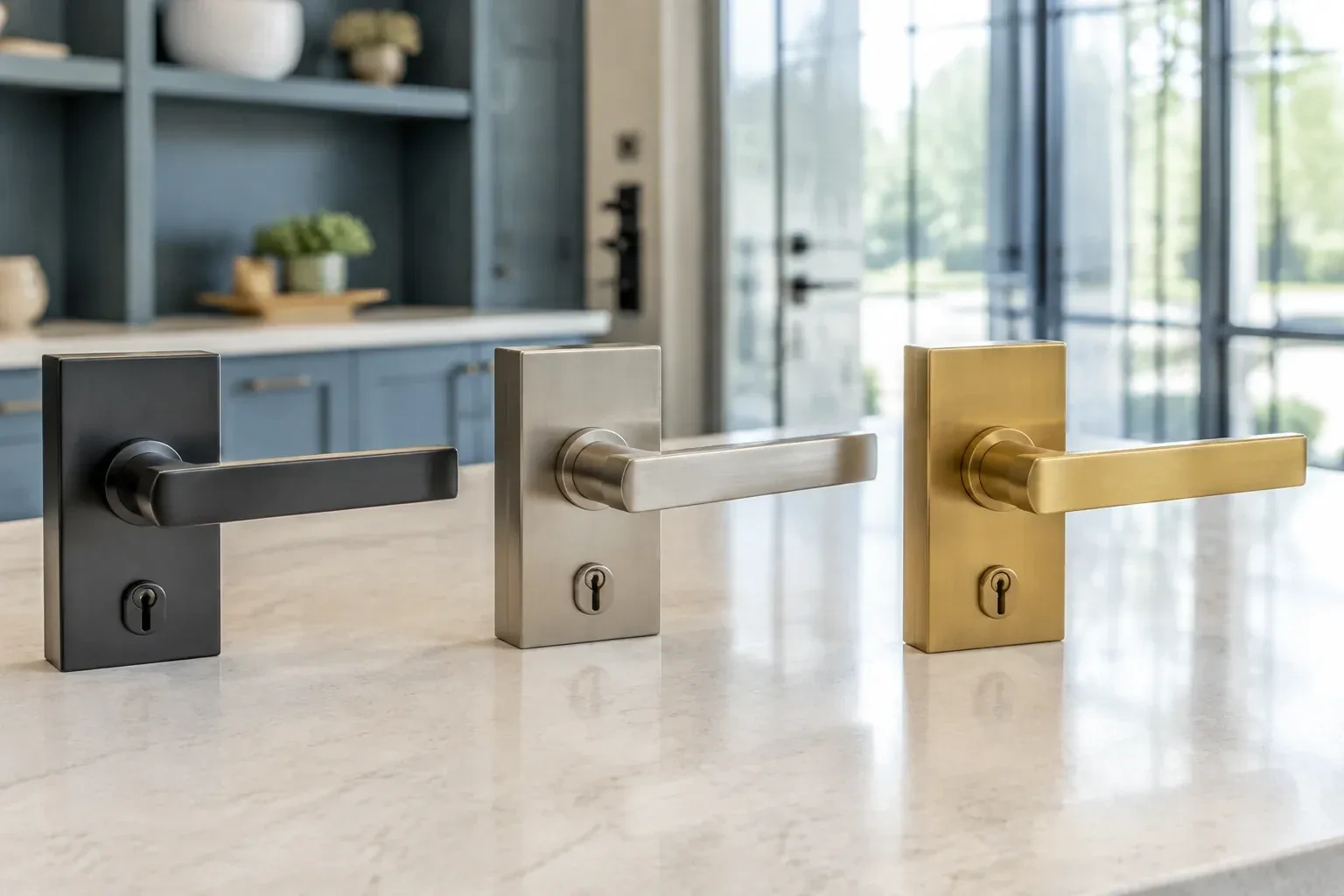
Three rectangular door-handle sets with keyholes in black, silver-colored and gold-colored finishes standing on a countertop. — Commercial Rekeying, Norwich

Commercial · Norwich

Commercial Rekeying

The manager's key ring went missing somewhere between the bank and the car, and the master on it opened every door in the building. Until the cylinders are changed, whoever finds it is holding the run of the place.

In plain words

Rekeying is also a chance to decide how the keys should work, not simply to change them. Most businesses settle on a small number of key groups: one key for the doors every employee uses, another for the office, cash room or server closet that only managers open, and perhaps a single master for the owner that opens everything. The locksmith maps this out on a keying chart before touching a cylinder, then pins each lock so the plan holds true on the door. Staff carry one key instead of a ring, managers carry two, and the chart tells you at a glance who can open what.

Sound familiar?Norwich

The call
A break-in overnight took the cash float and a staff member's bag with her work keys inside it. The glass is being replaced this morning, but the key that opened the door yesterday will still open it tonight unless the cylinders are changed.
NextHow the visit goes

Commercial Rekeying · Norwich

How the visit goes

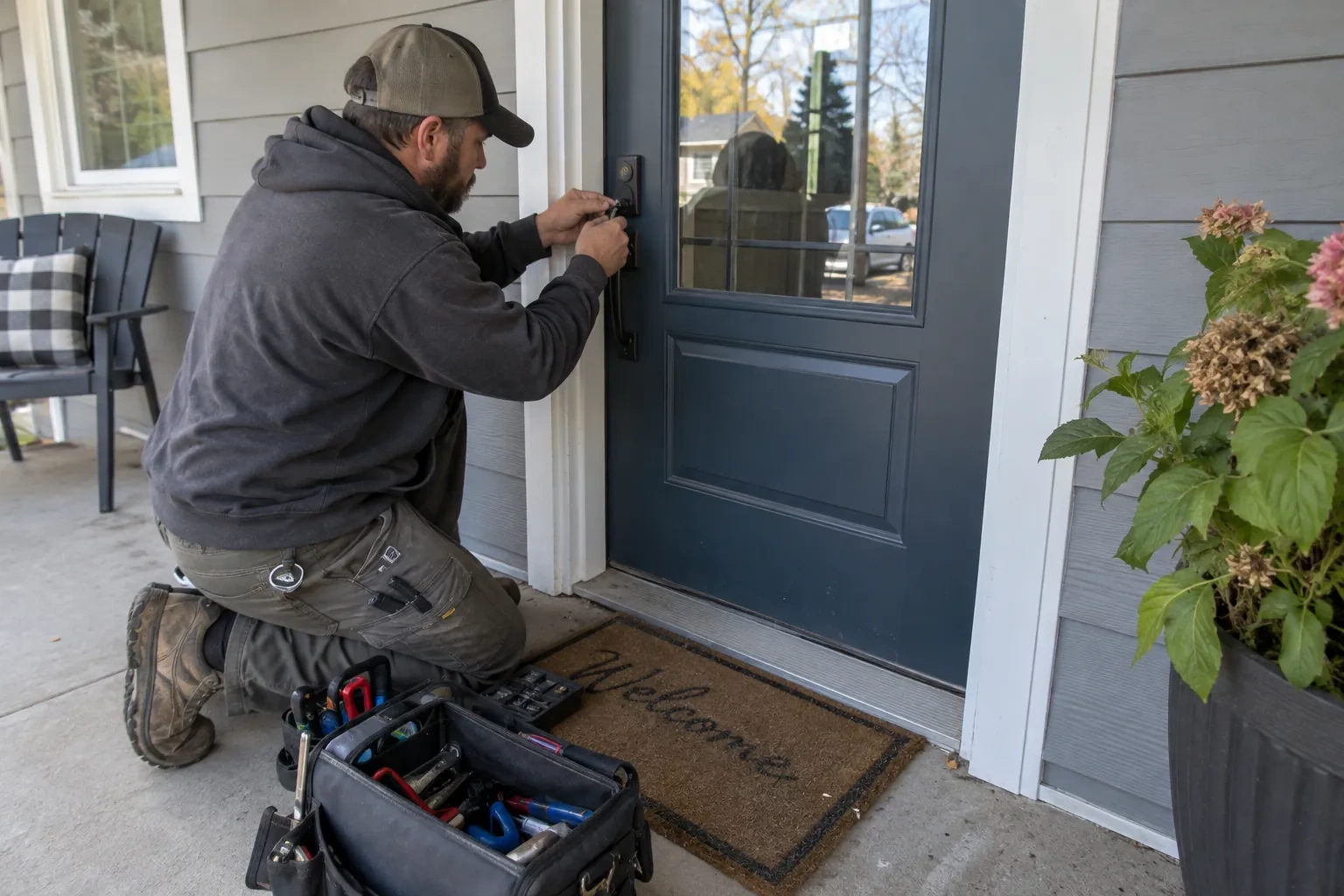
Technician kneeling on a porch at a navy blue front door, working on a black handle set beside an open tool bag. — Norwich
  1. Scene 1

    A walk of every door and lock

    The locksmith walks the premises with you and lists every opening that should be in the plan: the customer entrance, the receiving door, offices, stockroom, cash room, server closet, the mailbox, cabinets, and any padlocks on gates, compounds or roll shutters. Each lock is identified by type, since a mortise cylinder in an aluminum storefront door, a key-in-lever set on an office, a rim cylinder on a back door and an interchangeable core in a stockroom each come out and go back in differently. The keyway and the maker's mark are noted, and the condition of each cylinder is checked, so the list from the walk is what the quote and the work are built on.

  2. Scene 2

    Pinning the master and change keys

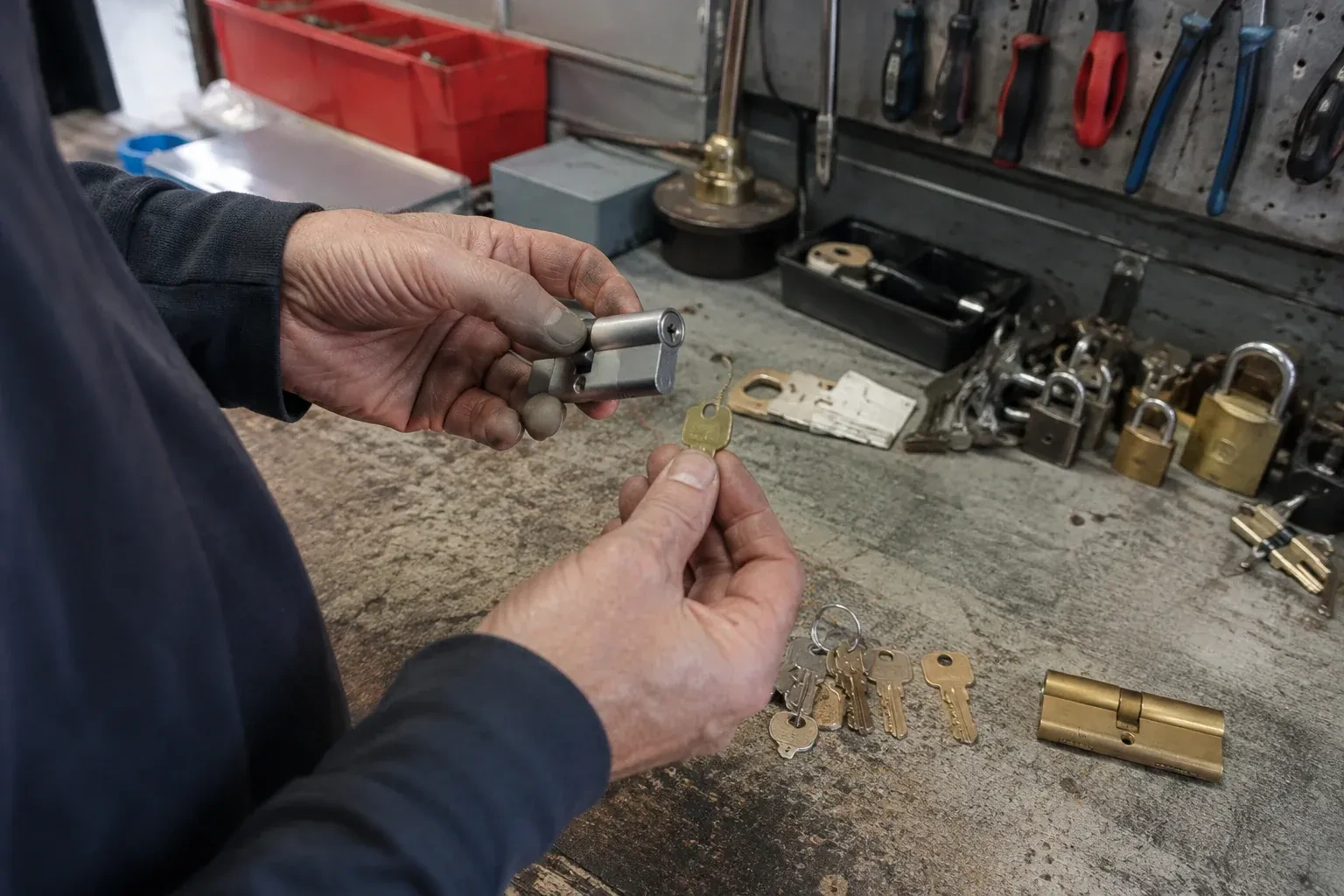
    When the plan includes a master, each cylinder is pinned to accept two keys: its own change key and the master above it. Thin master pins sit in the pin stacks so the plug can turn at both the change key's height and the master's; master keying can also create extra, unintended combinations, so the locksmith charts the system to keep those from lining up with someone else's key, and the manager's key opens its whole group and nothing beyond it. A well-built system leaves unused combinations in reserve, so when the business adds a door or a department next year the new cylinder joins the plan without disturbing the keys already in people's pockets.

  3. Scene 3

    Keys counted into named hands

    Alongside the chart comes a key register: each key's stamped code, the person it was issued to, the date, and a line for the date it comes back. Filling it in as keys are handed out on the first morning takes ten minutes and pays off at every departure afterwards, because the question becomes 'return key A-07' rather than 'did she have a key?'. Spare keys are counted too and kept somewhere locked rather than in the drawer where the old tangle lived. When the register and the chart agree with the keys on the hook, the business knows exactly who can open it, which is the whole point of the exercise.

In the van

  • Key stamp set and tags
  • Master pins
  • Plug follower
  • Code key machine
  • Key gauge and decoder

What shapes the quoteBradburn Subdivision Lock & Key Co.

A master key plan
Pinning cylinders to accept both a change key and a master, and designing the chart so no key opens a door it should not, is more work per cylinder than keying everything alike.
After-hours or split visits
Work done after closing, before opening or split across two visits to suit trading hours costs the same amount as a single daytime block. The exact figure is confirmed on site once the number of cylinders and the keying plan are known.
How many keys are cut
Each key cut to code and stamped is counted into the quote. Two per door group for a small shop and forty for a warehouse shift are different numbers.

FeesSame any hour

Have it ready

Before you call · 0 / 3

(226) 705-0421

You asked, we answered

We lost a master key. Does the whole building need doing?

Only the cylinders that master opened, which the keying chart identifies. If the lost key was the top master, that is every lock in the system; if it was a departmental master, it is that department's doors. Where no chart exists, the locksmith reads the cylinders first to establish what the key reached. The remaining doors, and any keys that never opened them, are left exactly as they are.

Do I need my landlord's consent before rekeying my unit?

Read the lease, because that is where the answer lives. Commercial tenancies are governed mostly by the lease itself, and many leases require the tenant to tell the landlord when locks change, to provide a key for emergencies, or to use the landlord's approved locksmith. Doors on the building's master system, such as corridor or service doors, are normally the landlord's to change. Bring the lease to the assessment and the locksmith will sort the doors accordingly.

Can all our doors be put on a single key?

Yes, if the cylinders share a keyway or can be fitted with ones that do. Keying everything alike is popular with small shops because staff carry one key and spares are simple. The trade-off is that one key then opens the cash room as readily as the front door. Many businesses choose a middle path: the doors everyone uses on one key, the sensitive rooms on another, and an owner's master that opens both.

Norwichinformation

OxfordOntario

Town
Norwich, Oxford
In business
18 years
Hours
Open 24/7
Nights, weekends and holidays, same fees
Visits
On-site assessment preferred. Request a visit or call.

2021 census: what it means at the door

Every square is one home in a hundred.

  • 64 in 100 homes · older homes
  • About 64% of homes in Norwich were built in 1980 or earlier, according to the 2021 Census.Older housing means older frames. Wood that has settled for years leaves strikes slightly out of line, so a bolt drags or needs a lift of the handle. A locksmith expects this and brings the shims, longer screws and strike plates to correct it.
  • Single-detached houses make up about 92% of homes in Norwich (2021 Census).A detached house gives a locksmith room to work: full access to both sides of every door, hinges and frames included. Repairs and upgrades can be thorough, from the front deadbolt to the gate latch, with nothing off limits.

Source: Statistics Canada, Census Profile

Open Norwich in Google Maps

On-site assessment

Request a visit.

The manager's key ring went missing somewhere between the bank and the car, and the master on it opened every door in the building.

(226) 705-0421, open 24/7.