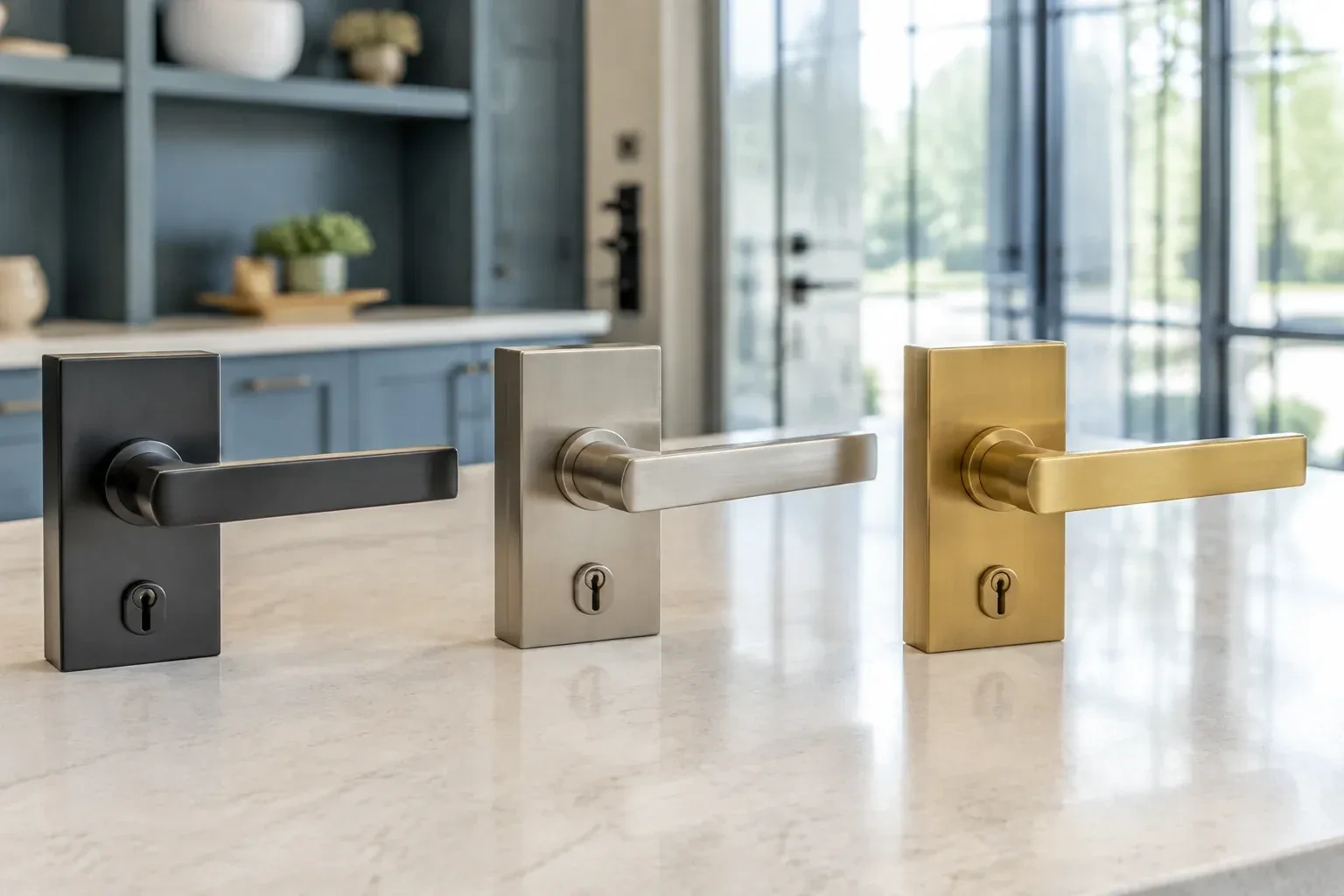
Sound familiar?Norwich
- The call
- Overnight someone forced the back door, and the cylinder face is scarred, the metal around the strike has pulled loose from the frame, and the latch no longer sits flush.
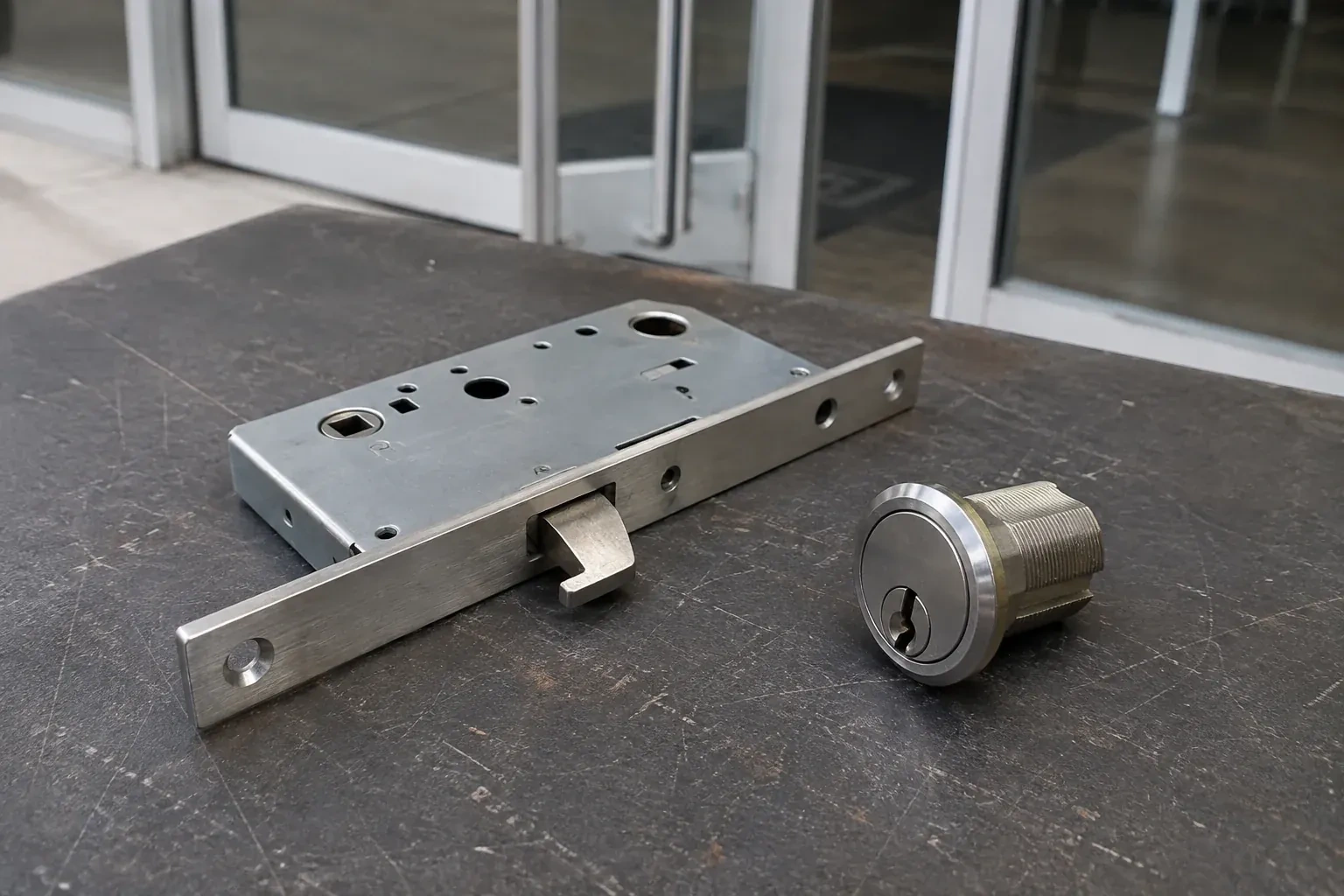
At closing time the hookbolt on the storefront door catches the keeper only on the second or third try, and one employee has started giving the door a shoulder to force it home.
Think of it as re-equipping a door for the job it actually does rather than swapping one lock for a similar one. A back door taking deliveries all shift needs different internals than a quiet office entrance, and a storefront's aluminum frame needs a narrow-stile lock a wood door was never built to accept. The locksmith matches lock body, cylinder and strike to the door's real prep and real use, decides with the business whether the new hardware joins an existing master key system or starts a new one, and leaves the opening cycling cleanly from both sides before the visit ends.
Sound familiar?Norwich
Commercial-Grade Lock Replacement · Norwich
Scene 1
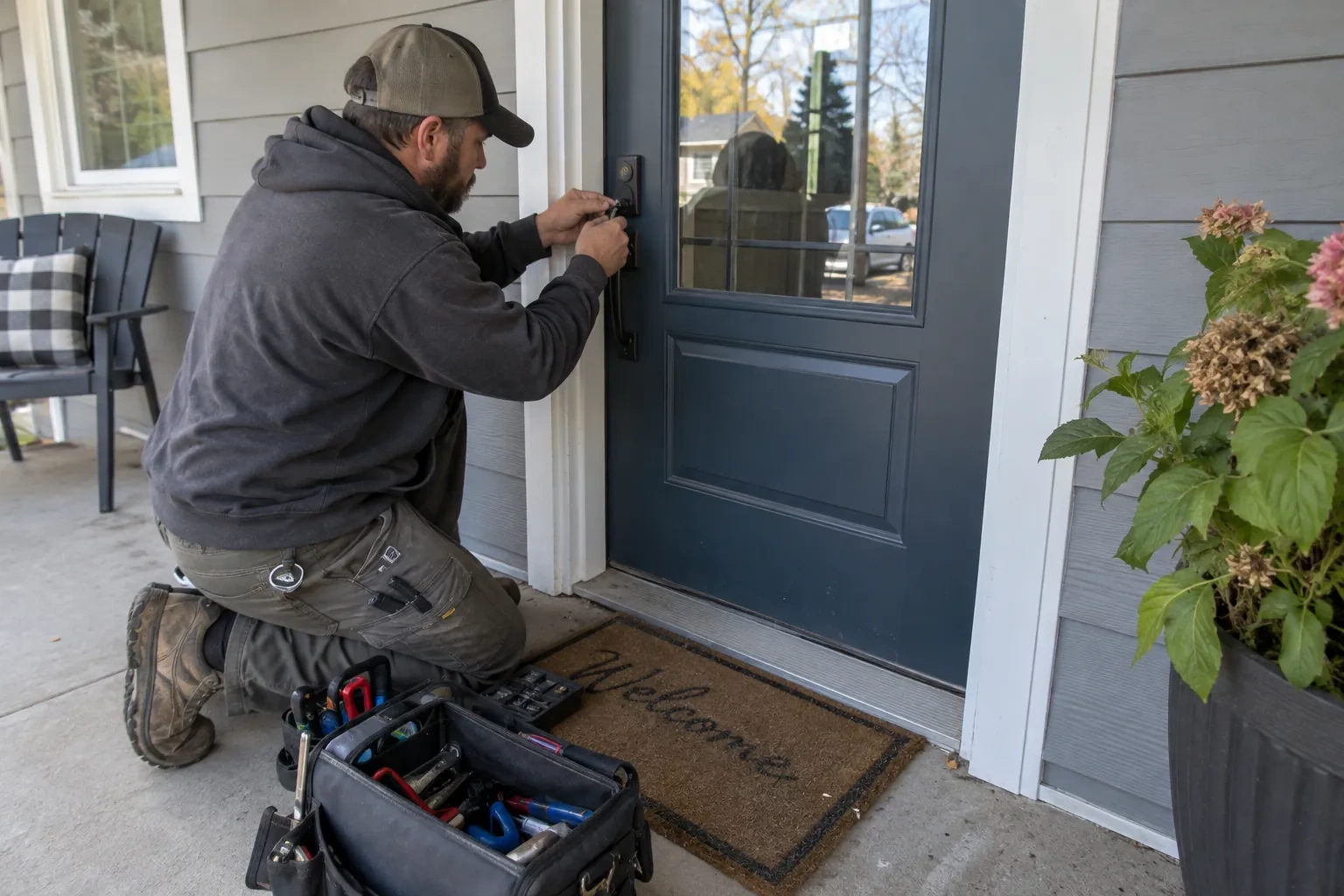
When the reason for the call is a forced door, the locksmith treats the assessment a little differently: documenting a scarred cylinder, a bent strike or a cracked frame for the business's own records or insurance purposes before removing anything. The door and frame are checked for structural damage beyond the lock itself, since a replacement lock fitted into a damaged strike pocket or a split frame will not hold the way new hardware should. Anything beyond the lock itself is noted as its own repair.
Scene 2
Where the opening already carries an electric strike, a maglock, a door position switch or a card-reader tie-in, that wiring is reconnected to the new mechanical hardware and tested together rather than assumed to still line up. Voltage, fail-safe or fail-secure operation, and monitoring contacts are confirmed against what the access-control or alarm system expects, since electrified hardware that is almost, but not quite, matched to the mechanical lock is a common source of a door that buzzes open but still needs force.
Scene 3
The business is left with hardware sized to how the door is actually used: a mortise lock body or heavy cylindrical lockset that can take the traffic of a busy entrance, or a narrow-stile lock built for the aluminum frame it is mounted in rather than adapted to it. Staff can be shown how the new hardware feels different from the old one, whether that is a firmer latch, a smoother deadbolt throw, or a different key profile, so nobody is caught off guard by hardware that behaves differently from what they are used to.
What shapes the quoteBradburn Subdivision Lock & Key Co.
FeesSame any hour
Yes, and it is a common request from businesses running more than one location. The locksmith works out a keying structure, a master for management, sub-masters per site or department, and individual change keys, then supplies cylinders across the locations that accept that structure. Keeping a record of the whole structure in one place is what makes it manageable afterward.
Yes. An interchangeable-core cylinder lets an authorized key holder pull the core and swap in a new one when a key needs retiring, without removing the whole lock from the door. Businesses with regular staff turnover often move to this system because it turns a rekey into a short in-house task rather than a full service call every time.
A home lockout or residential rekey is usually about one door and one household's keys. Commercial-grade lock replacement more often involves a system, several doors, a master key structure, and sometimes a fire or exit rule the door has to satisfy, so the assessment, the hardware selected and the record kept at the end are all built around managing that wider structure rather than a single lock.
OxfordOntario
Commercial-Grade Lock Replacement · Woodstock, East Zorra-Tavistock, Ingersoll, South-West Oxford, Zorra, Bradburn Subdivision, Perrys Lane, Burgessville
Every square is one home in a hundred.
On-site assessment
At closing time the hookbolt on the storefront door catches the keeper only on the second or third try, and one employee has started giving the door a shoulder to force it home.
(226) 705-0421, open 24/7.
On-site assessment preferred · (226) 705-0421, open 24/7