Bradburn Subdivision Lock & Key Co.Bulletin 3 of 3Woodstock, Ontario
Break-In Damage Lock Repair: what the visit covers
A failed break-in is still a repair.
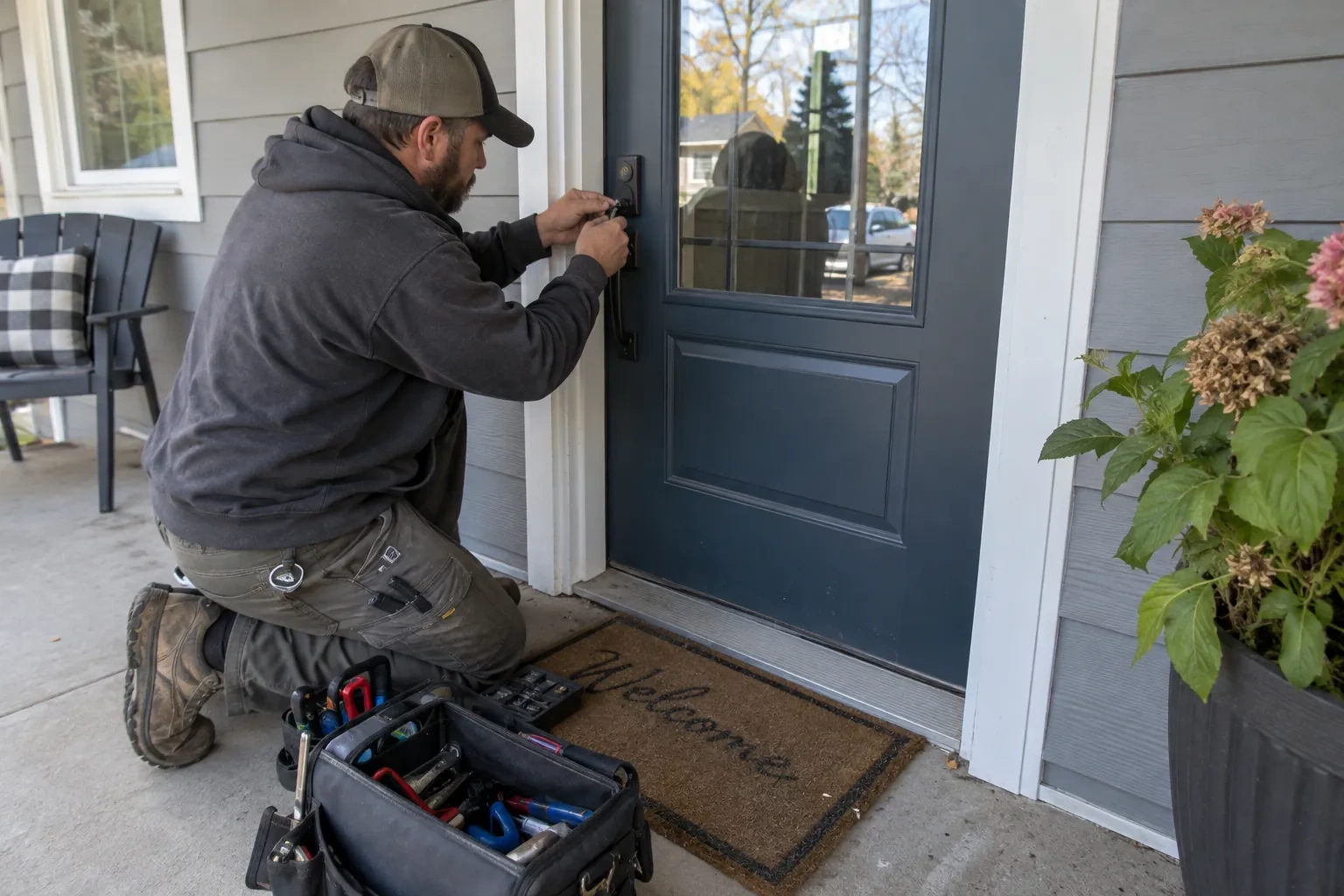
A failed break-in is still a repair. When a lock holds against a pry bar or a kick, the force goes somewhere: a strike plate bends, screws loosen, the door edge takes a gouge, the deadbolt binds where the bolt met the strike under load. Left alone, that door locks a little worse each week and the next attempt starts from where the first one finished. The visit checks every part that took the strain, replaces what bent, reinforces the strike and hinges with long screws and confirms the bolt throws cleanly again. It is also the moment to add what would have made the attempt pointless from the start.
Who is asking, and is the scene clear
The first minutes are about people, not hardware. The locksmith confirms that the caller has authority over the property: photo identification with the address, a lease, an ownership record or an instruction from the property manager. A break-in is precisely the moment a stranger could ask for a lock to be changed, so the check protects the household. The second question is whether anyone is hurt and whether the intruder is certainly gone; if the police have not yet been called, that call comes before any work, and the door is left as found until they say the scene is released. Only then does the assessment of the opening begin.
Sliding doors and garage entries
A forced patio slider is repaired by putting the panel back on its track, replacing the broken latch or fitting an auxiliary bolt into the frame, and adding the pieces that stop the next attempt: anti-lift blocks in the upper channel so the panel cannot be raised off its rollers, and a foot bolt or pin lock at the bottom. A garage man-door that carried only a knob lock gets a proper deadbolt, a boxed strike and long hinge screws to match the front of the house. Where an overhead door was the way in, the emergency release cord is shielded from outside reach and the opener remotes are reprogrammed.
A record for police and the adjuster
You are left with a plain written account: which opening was forced, what was found damaged, what was replaced, what was reinforced and with what, which locks were rekeyed and how many keys were cut, and what remains for another trade. The photographs taken before work began sit alongside it. The broken hardware is bagged for the adjuster unless you say otherwise, and the receipt for the securing visit goes in the same folder, since insurers ask policyholders to keep damaged property and receipts. Together these turn a stressful evening into a claim file that answers questions before they are asked.